
Understanding the Vistula Lagoon at high resolution is crucial for both science and society. Despite its ecological richness and cultural significance, the lagoon remains one of the least precisely mapped coastal environments in the Baltic region. Creating an accurate Digital Elevation Model (DEM) will finally provide the foundational data needed to monitor environmental change, protect vulnerable habitats, and support sustainable management of this sensitive ecosystem.
At the same time, the lagoon holds untapped archaeological potential. By revealing submerged landscapes, shipwrecks, and heritage sites, the project contributes to preserving Europe’s cultural history and deepening our understanding of human activity in coastal zones over millennia.
Finally, developing new multi‑sensor integration workflows and automated classification tools has international relevance. These innovations will set methodological benchmarks for shallow‑water research worldwide, offering scalable solutions for coastal mapping, heritage protection, and environmental monitoring in other complex aquatic environments.
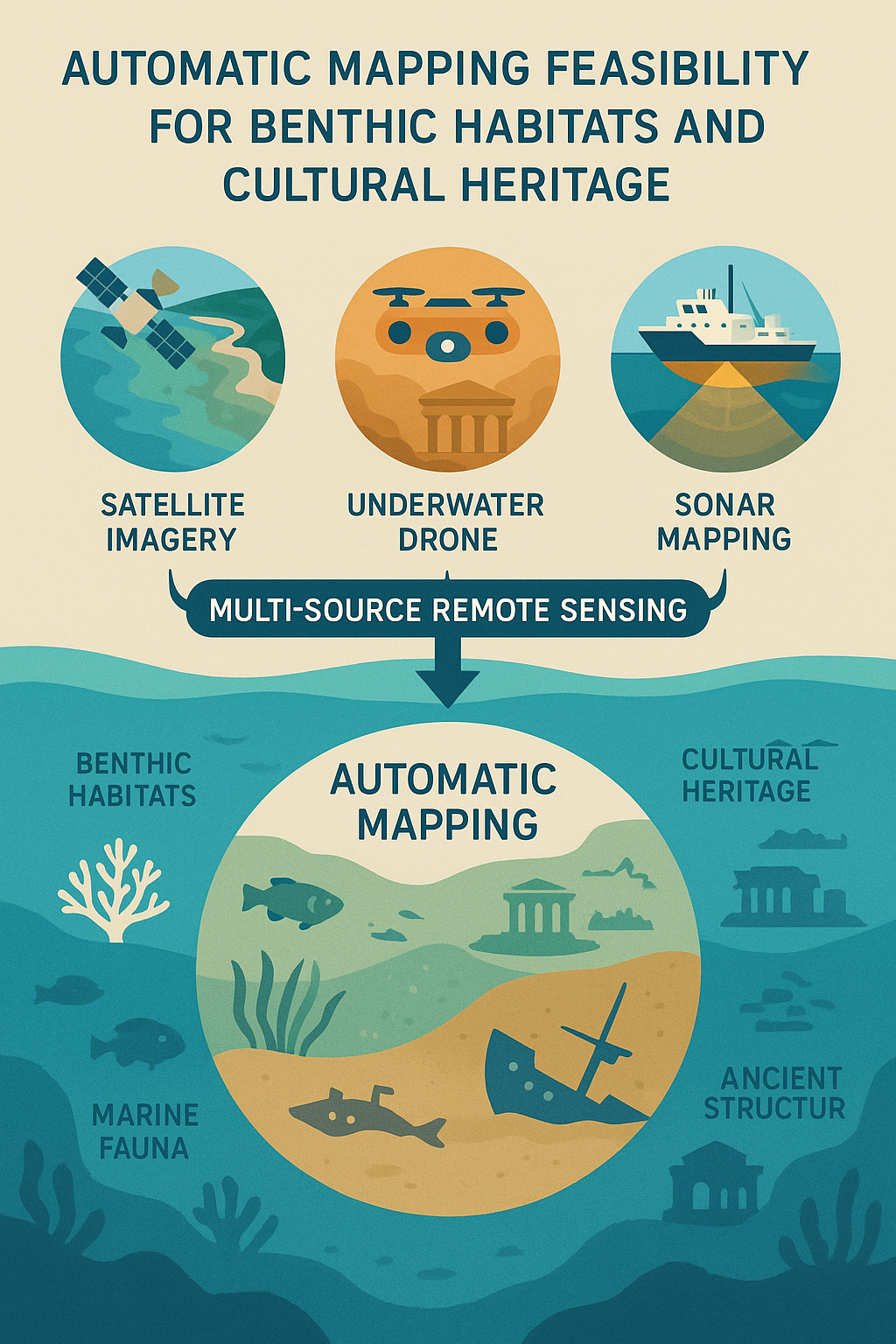
1. High‑Resolution Mapping of the Vistula Lagoon
We aim to generate the first high‑resolution Digital Elevation Model (DEM) of the Vistula Lagoon by integrating advanced remote‑sensing technologies, including Airborne LiDAR Bathymetry (ALB), Multibeam Echosounder (MBES), Satellite‑Derived Bathymetry (SDB), and shallow seismic profiling.
This unified dataset will deliver unprecedented insights into the lagoon’s morphology and environmental conditions.
2. Multi‑Sensor Data Integration
We will compare, evaluate, and fuse satellite, airborne, and acoustic datasets to create a comprehensive and highly accurate representation of the seabed.
This work will establish best practices for combining diverse remote‑sensing modalities in shallow, complex aquatic environments.
3. Archaeological and Paleoenvironmental Exploration
Using high‑resolution bathymetric and seismic data, we will search for submerged archaeological sites, paleo‑landscapes, and cultural heritage objects.
The project aims to uncover new evidence of human activity ranging from prehistoric settlements to medieval and modern‑era structures.
4. Automated Seafloor Classification
We will develop algorithms based on machine learning and deep learning—such as Random Forest, U‑Net, and Transformer architectures—to automatically classify:
- benthic habitats
- geomorphological features
- submerged cultural heritage sites
This automated workflow will support scalable, repeatable mapping on an international level.
5. Environmental and Temporal Change Analysis
Comparing new datasets with historical surveys, the project will identify changes in seabed structure, sediment distribution, and ecological conditions.
This provides essential knowledge for sustainable management and conservation of the Vistula Lagoon.